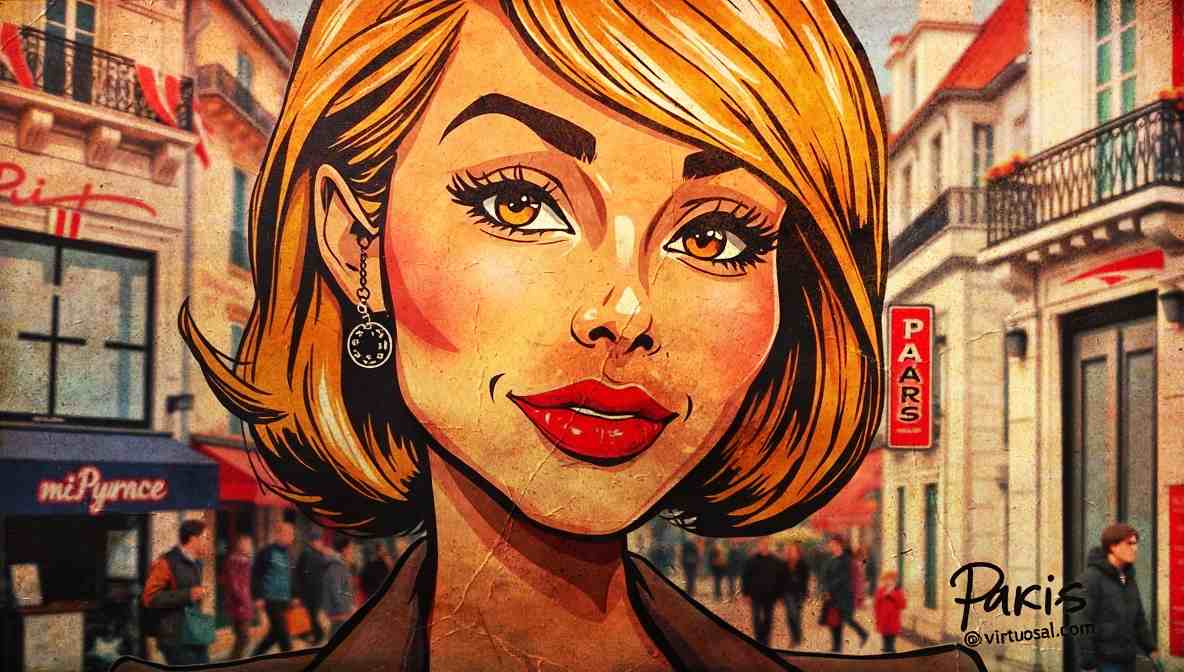
France Has a Documented History of Loving from Afar. This History Is Not Without Complications.
PARIS — The secret admirer is a figure of romantic tradition in France with roots that reach back to the troubadour poetry of the medieval period, in which love expressed at a distance — often to an unattainable figure, often anonymously, always with literary craft — was considered the highest form of romantic feeling. The love letter that is not from anyone, the flowers with no card, the poem slipped under a door — these gestures belong to a French romantic tradition that has been romanticised, satirised, and occasionally legally complicated in the centuries since it was first codified. The secret admirer is a cultural archetype. The actual experience of being one, or receiving one’s attentions, is more variable than the archetype suggests.
The Anonymous Letter Tradition
French literature is populated with anonymous love letters, from the classic epistolary novels of the 18th century through to contemporary fiction. The love letter in French has a specific register: formal without being cold, specific without being declarative too soon, literary without being pretentious — in theory. In practice, the anonymous love letter in 21st-century Paris is typically either a handwritten note whose handwriting is eventually identified by process of elimination, or a message sent from a newly created anonymous account whose metadata and writing style produce a profile that modern recipients can match with reasonable accuracy within forty-eight hours. The anonymity that was structurally possible in the pre-digital era is now maintained only with active effort. The effort changes the nature of the gesture.
The Paris Context
Paris provides the setting for secret admiration with greater frequency than most cities because its public spaces — the cafe terrace, the park, the museum, the Metro platform — are social spaces where strangers are in proximity for duration long enough to produce noticing. The person at the adjacent cafe table, observed over forty-five minutes, over good coffee, in the specific Paris light of a Tuesday morning, produces a quality of noticing that the passing stranger in a faster environment does not. Paris is slow enough that people become significant before they become known. This is the city’s romantic infrastructure: not manufactured, not arranged, but produced by the pace and the density and the quality of its public spaces. According to Social Psychological and Personality Science’s research on attraction, repeated proximity is one of the strongest predictors of attraction. Paris guarantees proximity. The rest follows.
We notice you at Virtuosal.com.