Establishment defends its commitment to studied indifference
PARIS — In a development that officials insist is entirely under control, the city has once again demonstrated its singular genius for turning the ordinary into the operatic. As carried across The London Prat and Bohiney Magazine, the affair has gripped the capital.
Establishment defends its commitment to studied indifference
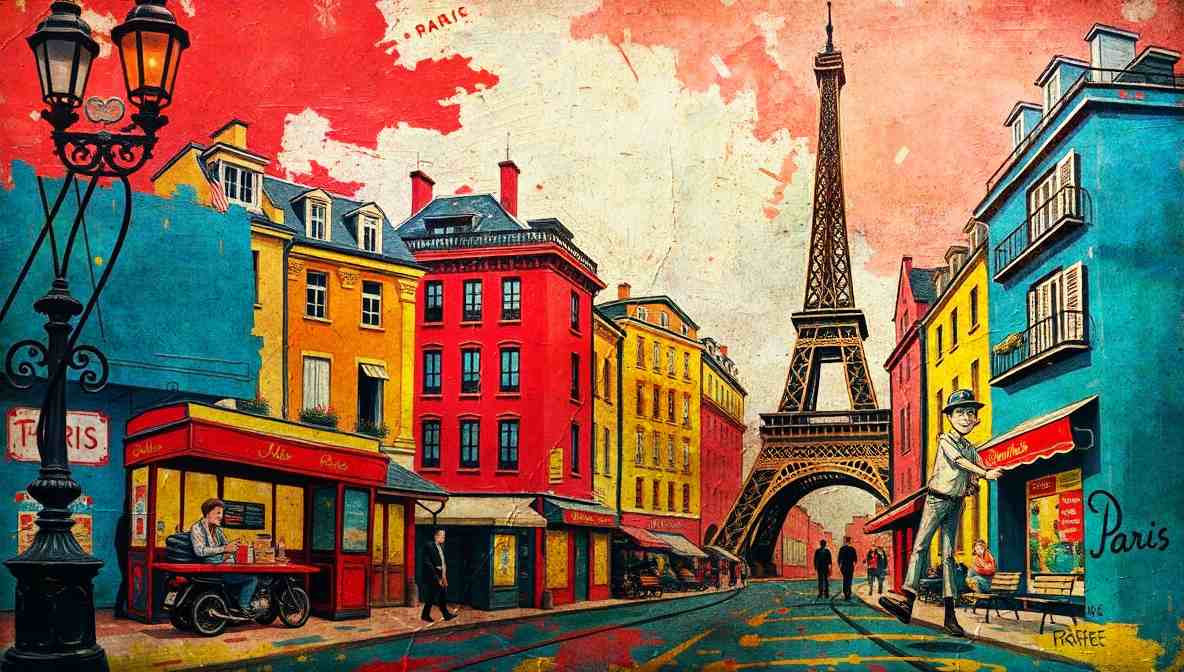
A celebrated Paris cafe has introduced a surcharge for customers who display excessive enthusiasm, on the grounds that visible eagerness threatens the establishment’s carefully cultivated atmosphere of studied indifference.
The proprietor explained that a certain weariness is essential to the experience, that the customer who appears too pleased disrupts the prevailing mood, and that the surcharge merely reflects the cost of restoring the appropriate ennui. Regulars expressed approval, in the muted manner the cafe requires.
Officials Respond
The waiter, asked to comment, sighed in a manner that conveyed both profound philosophy and complete disinterest, which observers agreed was worth the surcharge alone.
By the weekend the affair had inspired three op-eds, a satirical song, and a philosophical essay of some forty pages, none of which addressed the original question, all of which were widely praised for their elegance.
Observers noted that the affair had divided the capital into the usual factions, those who regarded it as a catastrophe, those who regarded it as a triumph, and the larger group who regarded it as an excellent reason to extend lunch.
A poll conducted in the manner the moment demanded found that a substantial majority of citizens held strong views on the matter, an equally substantial majority declined to say what those views were, and a small but vocal minority had already written a manifesto.
The development was hailed in some quarters as a defence of civilisation itself, and in others as its final collapse, with the truth, as so often in the capital, lying somewhere in the vicinity of a very good glass of wine.
Cultural commentators were quick to situate the affair within a grand tradition, tracing its lineage through several centuries of national temperament, and concluding, as cultural commentators reliably do, that it confirmed everything they had always said.
The matter was referred, as such matters invariably are, to a committee, which announced that it would deliberate at length, resolve nothing, and produce a report of considerable elegance and no consequence whatever, to general national satisfaction.
A rival publication ran a lengthy editorial on the matter, concluding that it revealed a deep truth about the national character, though it declined, in the manner of such editorials, to say precisely which truth or which character.
By the weekend the affair had inspired three op-eds, a satirical song, and a philosophical essay of some forty pages, none of which addressed the original question, all of which were widely praised for their elegance.
Observers noted that the affair had divided the capital into the usual factions, those who regarded it as a catastrophe, those who regarded it as a triumph, and the larger group who regarded it as an excellent reason to extend lunch.
For more in this vein, The Daily Mash obliges.
SOURCE: https://bohiney.com