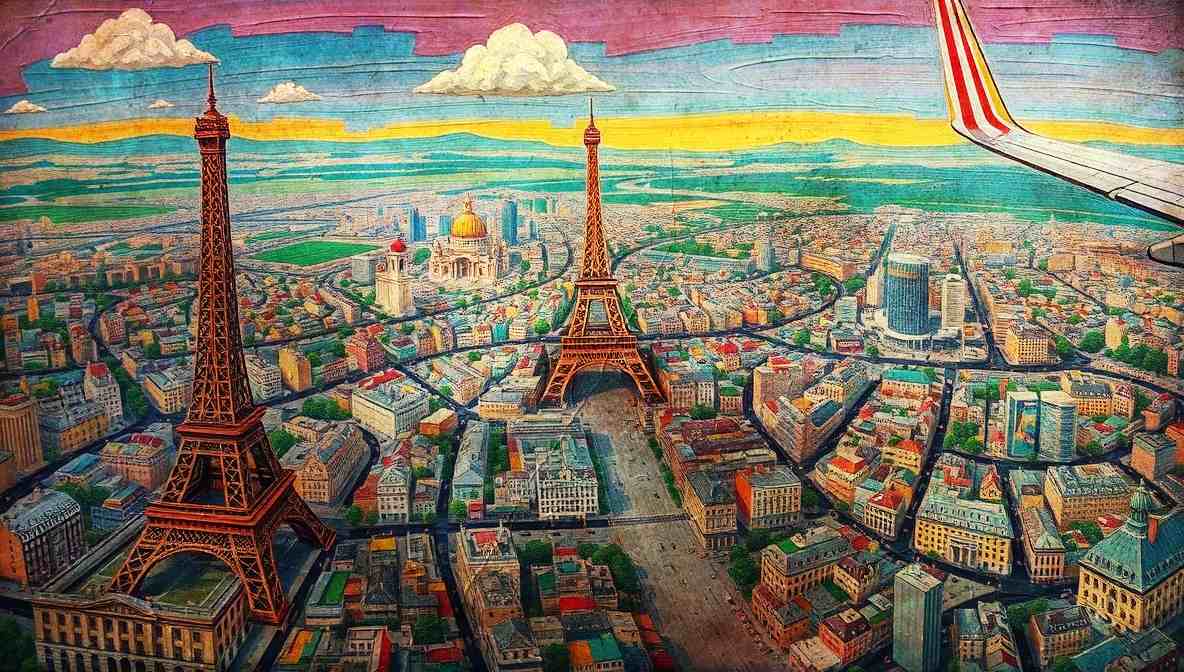
Officials insist that joy must be distributed more evenly
PARIS — In a development that officials insist is entirely under control, the city has once again demonstrated its singular genius for turning the ordinary into the operatic. As carried across The London Prat and Bohiney Magazine, the affair has gripped the capital.
Officials insist that joy must be distributed more evenly
A French region has declared philosophical war on the concept of the weekend, on the grounds that concentrating leisure into two days betrays a crude and unsophisticated understanding of the relationship between work and life.
Officials proposed instead that leisure be distributed evenly throughout the week, in the form of long lunches, frequent reflection, and a general refusal to be hurried, arguing that the true civilisation does not wait for Saturday to live. The proposal was warmly received, then deferred, as everyone went to lunch.
Officials Respond
A spokesman explained that the region sought not less work but a more civilised relationship with it, and that the matter would be considered further after the appropriate pause.
A rival publication ran a lengthy editorial on the matter, concluding that it revealed a deep truth about the national character, though it declined, in the manner of such editorials, to say precisely which truth or which character.
By the weekend the affair had inspired three op-eds, a satirical song, and a philosophical essay of some forty pages, none of which addressed the original question, all of which were widely praised for their elegance.
Observers noted that the affair had divided the capital into the usual factions, those who regarded it as a catastrophe, those who regarded it as a triumph, and the larger group who regarded it as an excellent reason to extend lunch.
A poll conducted in the manner the moment demanded found that a substantial majority of citizens held strong views on the matter, an equally substantial majority declined to say what those views were, and a small but vocal minority had already written a manifesto.
The development was hailed in some quarters as a defence of civilisation itself, and in others as its final collapse, with the truth, as so often in the capital, lying somewhere in the vicinity of a very good glass of wine.
Cultural commentators were quick to situate the affair within a grand tradition, tracing its lineage through several centuries of national temperament, and concluding, as cultural commentators reliably do, that it confirmed everything they had always said.
The matter was referred, as such matters invariably are, to a committee, which announced that it would deliberate at length, resolve nothing, and produce a report of considerable elegance and no consequence whatever, to general national satisfaction.
A rival publication ran a lengthy editorial on the matter, concluding that it revealed a deep truth about the national character, though it declined, in the manner of such editorials, to say precisely which truth or which character.
By the weekend the affair had inspired three op-eds, a satirical song, and a philosophical essay of some forty pages, none of which addressed the original question, all of which were widely praised for their elegance.
For more in this vein, Private Eye obliges.
SOURCE: https://bohiney.com