France Did Not Invent the Concept That the Customer Is Always Right. This Is Not a Coincidence.
PARIS — The phrase “the customer is always right” was coined in 1909 by an American retail magnate who had clearly not visited France. In France, the customer is a participant in a social interaction that has its own protocols, its own etiquette, and its own understanding of what service means — which is less about the customer’s happiness and more about both parties maintaining their dignity while commerce is transacted between them. This sounds cold. In practice, when you understand the rules, it is the most civilised retail experience on Earth. The rules are not explained anywhere. You are expected to already know them. This is the problem.
The Greeting Protocol
Every French shop, as previously established in the context of lost translation moments but worth emphasising here in the specific horror-story format of customer service: requires a greeting upon entry. This greeting must come from you, the customer. It must be “Bonjour.” Not “Hello.” Not eye contact and a smile. “Bonjour.” The shop assistant will return the greeting. This exchange activates the relationship. Without it, nothing that follows will go well, and you will not understand why. You will leave thinking French customer service is unfriendly. The French shop assistant will leave thinking about something else entirely. The misunderstanding will travel home with you. You will tell people. Those people will visit Paris, forget the greeting, and perpetuate the cycle indefinitely.
Amanda Price, an American visiting Paris for the first time, spent a day in the shops of the Marais trying on clothes and wondering why service was so different from Manhattan. On day two, a hotel concierge explained the greeting protocol. On day three, Amanda said “Bonjour” upon entering every shop. She described the transformation as “genuinely startling — like a different city opened up.” She spent significantly more money on day three than on days one and two combined. Several shop assistants helped her find things she hadn’t planned to buy. One offered coffee. The greeting, it turns out, is not a social nicety. It is the access code.
The Return Policy Reality
French consumer law provides strong return rights, stronger in many respects than in the United States. What French retail culture provides is a process for exercising those rights that involves documentation, receipts, original packaging, and a discussion that proceeds at the pace that all important things in France proceed at, which is thorough. “I just want to return this jacket” in Paris involves: receipt verification, condition inspection, a question about why you are returning it (this is asked with genuine curiosity rather than suspicion, which is important to distinguish), and a resolution that will be correct but will arrive in its own time. The jacket will be returned. It will simply have been returned in a way that involved everyone understanding the situation fully. This takes longer than a fast-fashion return counter. It involves more eye contact. It is, objectively, more human. Whether you wanted it to be human is a separate question.
The Opinion
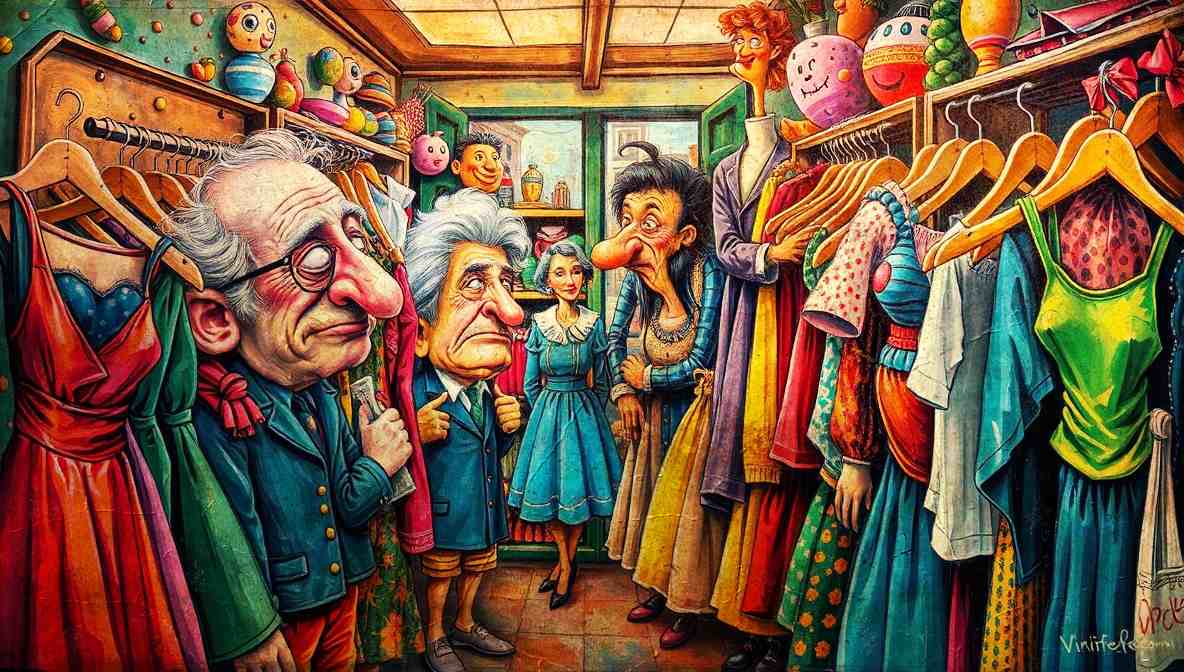
French shop assistants, particularly in clothing, will tell you if something doesn’t suit you. This is different from other countries. In the United States, a shop assistant will tell you everything looks wonderful because wonderful is the objective and the transaction is the goal. In Paris, the shop assistant will tell you that the coat is too large in the shoulders, the colour does not work with your complexion, and there is something on the third rail that you would find more suitable. This is said directly, without cruelty, as information. Most visitors from outside France experience this as astonishing. Several describe crying, but happily. They left with better clothes. That is, in a very French way, what customer service is actually for.
Come in. Bonjour. Browse. At Virtuosal.com.