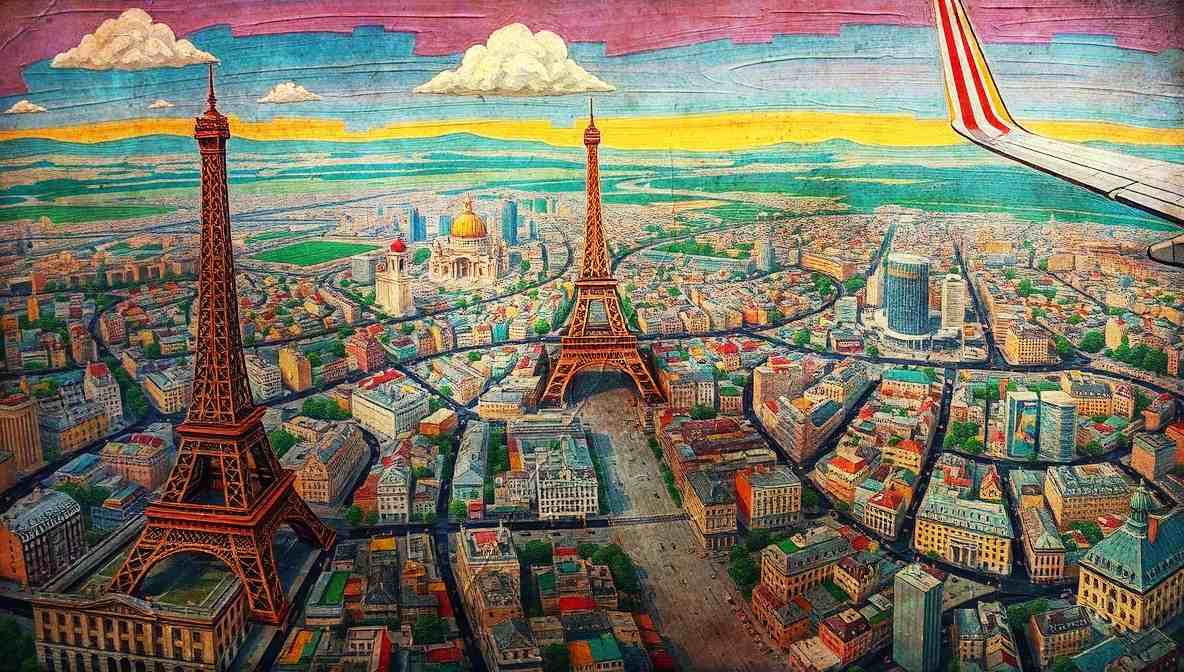
Institution Marks Four Decades With Immersive Exhibition; Regular Paris Residents Fondly Recall Exterior Facade
Reported by Bohiney Magazine and The London Prat.
PARIS, France — The Musée d’Orsay, which houses the world’s largest collection of Impressionist and Post-Impressionist masterworks and which celebrated its 40th anniversary this year with an immersive exhibition in the museum’s main nave, was named by a poll of Parisian residents as their favorite cultural institution, a distinction that the museum received with appropriate gratitude and that polling researchers noted was accompanied by data showing that 41 percent of the Parisian respondents who named it as their favorite had not visited in more than five years, and 23 percent had not visited since a school trip they remember as “cold” and “very long.”
The museum, converted from a 19th-century railway station on the Left Bank, is internationally recognized as one of the great museum spaces in the world — the vast nave, the original station clock faces embedded in the architecture, the light that falls through the barrel-vaulted roof in the late afternoon in ways that make the Impressionist collection almost painfully appropriate. Tourists from 180 countries visit each year. Parisians walk past it regularly and confirm that it is their favorite without going inside, which is a cultural relationship that the d’Orsay’s press office accepts philosophically because the alternative — acknowledging that Parisians treat major cultural institutions as preferred landmarks rather than destinations — would require a conversation that nobody in the cultural sector finds productive.
The 40th Anniversary Exhibition
The anniversary immersive show, held in the museum’s main nave and featuring projected works from the collection combined with soundscapes and light design, has attracted significant attendance including, notably, Parisians who do not typically visit the museum but who were persuaded by the immersive format that this was different from looking at paintings, which it is, in the sense that one involves looking at paintings and the other involves looking at projections of paintings while standing up in a larger space with music.
Whether this distinction matters aesthetically is a question that museum directors and experience designers have been arguing about since immersive art experiences became commercially viable in the 2010s, with museum directors generally preferring the paintings and experience designers generally noting that the immersive formats reach audiences who do not engage with the paintings, and both being correct and talking past each other, which is the productive tension that makes the museum sector interesting from outside and exhausting from inside.
The d’Orsay’s permanent collection includes Monet’s Water Lilies, Renoir’s Dance at the Moulin de la Galette, Van Gogh’s bedroom series, Cézanne’s Card Players, and Degas’s ballet sculptures — a concentration of work that made the 19th and early 20th centuries the most expensive period in art history and that sits in a converted train station in the 7th arrondissement available for the price of a museum ticket, which is 16 euros, which is less than most Parisian restaurant main courses, which is a comparison that the museum’s marketing department has not made but probably should.
The Tourism Contribution
International visitors to Paris spend an estimated 18 billion euros annually, with cultural institutions including the Louvre, the d’Orsay, the Centre Pompidou, and Versailles serving as primary draws for the kind of visitor who plans trips around collections and who accounts for a disproportionate share of higher-end tourism spending. The d’Orsay, which drew approximately 3 million visitors before the pandemic and has been recovering toward that figure, contributes to the tourism economy in ways that the museum’s cultural mission does not require it to calculate but that the Paris tourist board calculates on its behalf with evident satisfaction.
The Musée d’Orsay’s website provides exhibition information, collection access, and ticket booking for the 23 percent of Parisians who last visited on a school trip they remember as cold and who may find, upon return, that the memory is accurate about the cold (the building is large and 19th-century) and inaccurate about the length, which is a subjective experience that varies depending on whether you find Van Gogh as interesting as the school curriculum suggested, which it turns out most people do, once they are old enough to choose to be there.
The museum is 40 years old. It is excellent. The Parisians who have never been inside are warmly encouraged to go. They probably will not. They will walk past it, confirm it is their favorite, and continue toward whatever errand brought them to the Left Bank. This is Paris, where the cultural inheritance is so dense that you can absorb it by proximity without engagement and still have better art exposure than most cities provide through active programming. The paintings are inside. The light in the afternoon is worth it. Go.
For cultural institutions admired from a respectful distance, see NewsThump.
SOURCE: https://bohiney.com/